Multiplication Success
Using a Step-by-Step Approach

Having strong multiplication skills is essential to your child's elementary math success. Having your child learn their tables through rote learning (repition), however, is not enough. Nor is it the desired method of teaching. They must have a strong foundation in the concept of what this process is all about.
The Multiplication Journey
Learning how to multiply is a journey your child will start in Kindergarten, and continue all the way through 6th grade.
Now a very important fact for you as a parent to know; is that it does NOT take seven years of schooling to teach a child how to multiply.
Our education system is composed of learning and doing in one grade. Then, in the following grade, more than half the year is spent 'reviewing' what was done the previous year, before embarking on new material. Reviewing material is of course, necessary - but not for the length of time it is done.
If your child is, for example, in 5th grade and struggling to multiply, don't fret, they can catch up, and perhaps even advance beyond where they should be, in a matter of a few short weeks. Success just requires a little extra (but very focused) work at home.
If you follow the steps I lay out below, and your child completes the worksheets offered with each section - you guys will be well on your way to victory!
I also provide fact sheets, tables, charts, and some suggestions for games (so it doesn't have to be dull!).
If you are just starting out teaching your child this material for the first time - be sure they can count to 100 effortlessly before you start. They
should also have no difficulty recognizing numbers, or adding numbers.
Steps to Multiplication Success
- Teach comprehension, using the skip number technique.
- Learn to count to 100 (or the first number beyond) by skip numbers 2's, 5's and 10's
- Complete skip number worksheets.
- Use skip number charts as a study aid, for your kids once skip numbers.
- Expand on concept by using multiplication arrays
- Complete multiplication arrays worksheets, while progressing to multiplication algorithms.
- Introduce the multiplication chart that corresponds with the skip number you are working on as an aid.
- Allow them to use this as you play a game of 'war'. This is fun, and efficient way, for your kids to learn their tables.
- single digit, and double digit by single digit algorithm worksheets. If your child has any difficulty with these (other than speed, which only comes with practice) move back to arrays again it is probably a comprehension issue.
- Review your childs understanding of number placement.
- Try your child with some multiple digit multiplication with no carry over involved.
- Complete all steps again for skip numbers 4's, 6's and 8's.
- Complete all steps again for skip numbers 3's, 7's and 12's
- Complete all steps again for skip numbers 9's and 11's.
What comes next?
When all of the above is complete, and they are super confident with their multiplication facts, it will be time to move on to more complicated methods of multiplying, such as Single and Double digit problems, presented in the traditional algorithm style where a knowledge of number placement and writing numbers in expanded form is required.
If you enjoyed this piece on Multiplication Steps, I encourage you to check out all the information in my Numbers and Operations Section, or explore all the other great material Printable Math Worksheeets has to offer.
Keep In Touch!
You can send me a quick message, subscribe to K6Math Fun & Update, or join my Facebook Page - K6Math. Choose all the options so you don't miss any of the new material added to this site.
JOIN THE CONVERSATION ON FACEBOOK


Recent Articles
-
Printable Math Worksheets you need for your K-6 Student, and Much More
May 18, 17 04:07 PM
A comprehensive Resource of Printable Math Worksheets and Parent Tuition Material
-
Easter Tangram Fun - Free and Printable!
Apr 07, 17 04:46 PM

Use this Magic Egg Tangram to hatch your very own Easter Egg Chicks!
-
Place Value Chart to the Billions
Sep 26, 16 03:37 AM
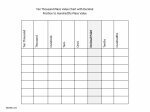
Find the perfect Place Value Chart for your needs here, from hundreds to billions
